
Surge In Southern Black Early Turnout Ahead Of 2026 Midterms Sparks Talk Of Political Backlash
Black voters throughout the South are participating in early voting for the 2026 midterm elections at rates comparable to presidential cycles. Reports indicate that rising household expenses, judicial rollbacks to voting protections, and contentious redistricting fights are driving strong civic mobilization across key states.
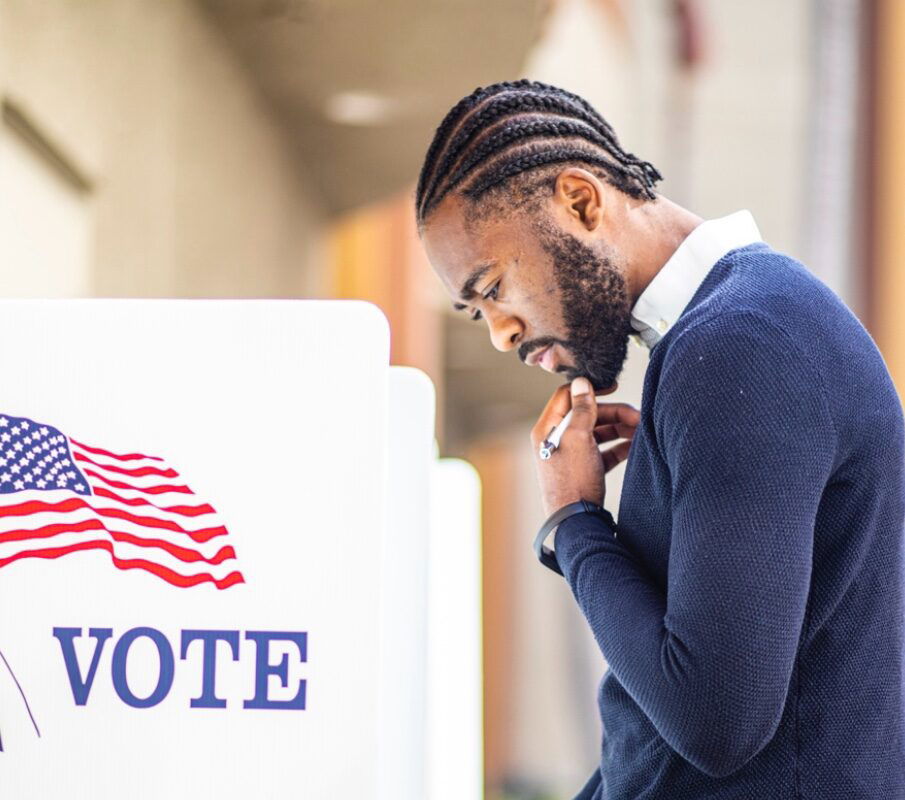
Black voters across several Southern states are turning out in notable numbers ahead of the 2026 midterm elections, according to a report by Black Enterprise. Early voting figures across Georgia, Florida, North Carolina, South Carolina, and Louisiana reflect an acceleration in voter participation that political strategists from both major parties are watching closely.
As reported by Black Enterprise, citing analysis from POLITICO, this rising civic engagement—characterized as a political backlash—follows the return of President Donald Trump to the White House, renewed Republican-led redistricting efforts, and Supreme Court rulings that curtailed protections under the Voting Rights Act.
Beyond legal and electoral redistricting battles, daily economic pressures serve as a primary catalyst for voter participation. Soaring costs for basic necessities such as groceries and fuel, alongside healthcare expenses and shifts in federal policy, have become pressing issues for community members. In Lancaster, South Carolina, pastor and Air Force veteran Eddie Boykin described the ongoing financial hardship affecting his local congregation. According to Boykin, working households are experiencing significant strain under current federal policies, stating, "The current government has attacked almost every income stream that this community has to survive," before summarizing, "It’s money — they’re hurting."
Redistricting disputes have generated similar urgency among electorate bases in the region. In Mississippi, an unsuccessful push to redraw congressional map boundaries that would have compromised Democratic Representative Bennie Thompson’s seat produced strong local pushback. Scott Colom, the Democratic nominee in Mississippi's 2026 U.S. Senate race, noted that the redistricting fight energized everyday citizens who resented attempts to manipulate district lines rather than win support directly from constituents.
The regional stakes brought former President Bill Clinton to Tupelo, Mississippi, to campaign alongside Colom. During his appearance, Clinton addressed the political environment surrounding Black voters, asserting that the Trump administration had sought to undermine their influence while arguing that the Department of Justice had been turned into a political entity rather than an agency centered on fair justice.
Democratic pollster Terrance Woodbury pointed out that standard voter enthusiasm metrics often fail to capture the pragmatic reasoning behind voter turnout. Woodbury recounted an interaction with a voter who likened the necessity of casting a ballot to routine sanitation, explaining that neglecting the duty inevitably causes conditions to deteriorate. The resulting engagement has caught the attention of both parties, with Republican strategist Mark Harris acknowledging the scale of regional turnout and noting that campaigns are observing what could amount to presidential-level Black participation during a midterm cycle.