
How 3D Scanning and Digital Fabrication Are Reshaping Custom Jewelry Design
Custom jewelry design is shifting from traditional wax carving to 3D scanning and digital fabrication. Market projections indicate the 3D-printed jewelry sector will grow to over $3 billion by 2034 as jewelers adopt faster, more precise manufacturing methods.
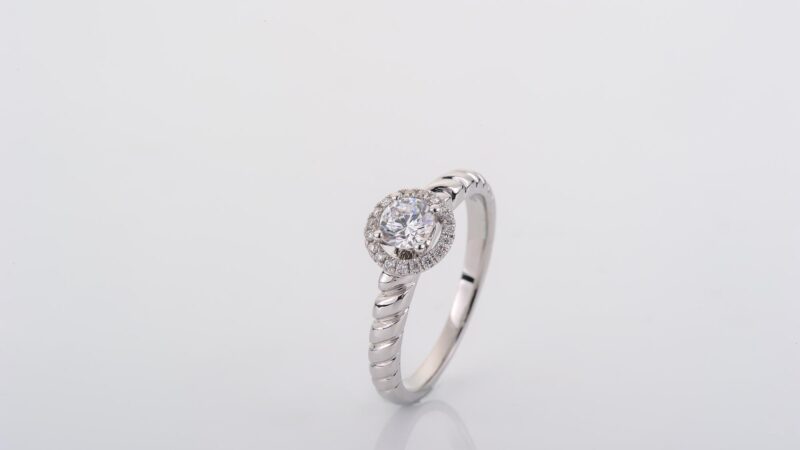
The custom jewelry industry is undergoing a significant technological transformation, moving away from labor-intensive manual wax carving toward advanced digital workflows centered on 3D scanning and additive manufacturing. According to reporting by AllHipHop, traditional custom jewelers historically spent long hours or entire workdays hand-carving individual wax models for bespoke pieces. Today, the custom creation process increasingly begins with a high-resolution digital file generated through 3D scanning technology.\n\nData from market research firm Fortune Business Insights highlights the rapid financial expansion of this technological shift.
As reported by AllHipHop, the global 3D-printed jewelry market is projected to climb from $980 million in 2026 to $3.09 billion by 2034. This commercial growth reflects a fundamental evolution in how custom accessories are conceptualized, modified, prototyped, and brought to market by independent jewelers and commercial production studios alike.\n\nAllHipHop notes that conventional wax carving presented numerous operational hurdles for jewelry makers seeking to scale their business operations. A wax carver could take an entire day to complete a single complex prototype, severely restricting the total volume of orders a workshop could accept while pushing labor costs higher on every piece.
Furthermore, hand-carved jewelry designs naturally suffered from minor variations, making perfect symmetry difficult to guarantee. Once cast, a wax model was destroyed and could not be reused, forcing jewelers to start from scratch if a client requested a variation or resize later. Manual measurements also increased fitting errors and material waste.\n\nIn contrast, 3D scanning enables jewelers to convert physical concepts and family heirlooms into fully editable digital files with minimal effort.
According to AllHipHop, scanning a standard ring requires just one to three minutes, producing a watertight digital mesh ready for computer-aided design software within five to ten minutes total. This represents a substantial speed improvement over traditional manual measurements and sketches, which typically took 30 to 60 minutes. Professional scanning systems offer accuracy down to 5 microns, while specialized gemstone scanners achieve precision within 10 to 25 microns to capture pavilion depth, girdle thickness, and facet angles accurately.\n\nDirect metal printing is further streamlining production by eliminating the need for traditional casting supply chains, molds, and burnout kilns.
AllHipHop reports that jewelers can now fabricate precious metal items directly from digital files in a single operation, reducing scrap metal waste. Advanced systems even support multi-metal printing, allowing contrasting elements like titanium and platinum to be combined in a single piece. Additionally, generative artificial intelligence tools now assist designers in creating lightweight lattice structures and organic forms that would be impractical to produce by hand.\n\nDespite the speed and repeatability of digital techniques, hand carving retains a distinct role in the industry.
AllHipHop reports that wax carving remains valuable for creating one-of-a-kind artisan pieces, highlighting heritage craftsmanship as a selling point, or supporting hybrid workflows. However, the rise of 3D scanning and printing ensures that modern custom jewelry businesses can achieve greater precision, faster turnaround times, and reduced material costs.