
Houston Black Judges and Civil Rights Advocates Mobilize Legal Front to Defend Democracy
Black judicial leaders in Houston are stepping to the forefront of the fight to preserve American democratic norms. Their focus on legal accountability aligns with nationwide initiatives by civil rights organizations to counter voter suppression, monitor legal challenges, and safeguard access at the ballot box.
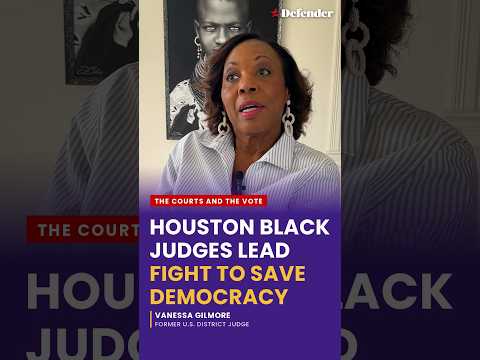
According to reporting from Black Press USA, Black judges in Houston are positioned at the forefront of ongoing efforts to protect democratic institutions as legal battles and ballot access concerns intensify across the country. The report underscores the essential role played by African American jurists in maintaining constitutional protections and ensuring equitable justice in urban court systems.
While Black Press USA reported that Houston's Black bench is leading the charge in safeguarding democracy, specific judicial names and court dockets were not detailed in the initial announcement. Kulture Newz has not independently confirmed the specific court actions, individual rulings, or case filings referenced in that initial bulletin, as additional documentation has not yet been released.
This spotlight on judicial vigilance in Texas coincides with an aggressive push across national civil rights networks to counter threats to democratic participation. According to reporting from the Atlanta Daily World, legal defense organizations are preparing for unprecedented challenges at polling sites ahead of the 2026 midterm elections.
As part of this broader legal countermeasure, the NAACP announced the launch of a national voter protection hub scheduled to begin operations on October 24, as reported by the Atlanta Daily World citing The Washington Post. The specialized platform is designed to give voters a centralized resource to report instances of intimidation and procedural suppression via online portals and telephone lines.
NAACP General Counsel Kristen Clarke affirmed that civil rights attorneys are prepared to seek immediate judicial intervention. "We are ready," Clarke told The Washington Post. "We have an army of legal volunteers across the country and are prepared to activate and seek emergency relief on Election Day where necessary."
According to the Atlanta Daily World, the NAACP's legal infrastructure is particularly focused on monitoring voter intimidation, contested revisions to local election regulations, and the ongoing consequences of legislative redistricting on Black voting power.
In addition to community reporting tools, civil rights attorneys are challenging government oversight policies directly in federal court. The Atlanta Daily World reported that the NAACP filed a lawsuit on October 2 against Justice Department Assistant Attorney General Harmeet Dhillon, seeking administrative records concerning proposed deployments of federal election monitors to local polling precincts.
"To be clear, there is no federal statute that gives the U.S. Department of Justice the right to send their so-called 'election monitors' to polling sites across the country," Clarke stated in a formal release documented by the Atlanta Daily World.
These courtroom defenses accompany major voter education and turnout operations led by Black political organizations. According to reporting from the Atlanta Daily World citing the Black Information Network and The Associated Press, the Congressional Black Caucus Institute initiated its "SO VOTE" campaign with a budget of at least $4.5 million. The campaign is actively registering and mobilizing Black, rural, and young voters across 16 congressional districts, with statewide operations focused in Mississippi and Georgia.
Civic leaders emphasize that judicial resolve and active community defense remain deeply intertwined. According to Black Press USA, voting rights leadership groups such as Higher Heights, led by Glynda Carr, continue to emphasize Black political power and judicial accountability as elections approach. From bench rulings in Houston to federal litigation across the country, Black legal figures continue to play a decisive role in defending ballot access and institutional equity.