
HBCU Housing Squeeze Intensifies as Campus Enrollment Reaches Record Highs
Historically Black colleges and universities are facing historic housing shortages as admissions reach unprecedented levels across the country. An analysis of institutional policies reveals that few campuses offer written dorm guarantees, leaving incoming students navigating tight deadlines, non-refundable fees, and temporary hotel placements.
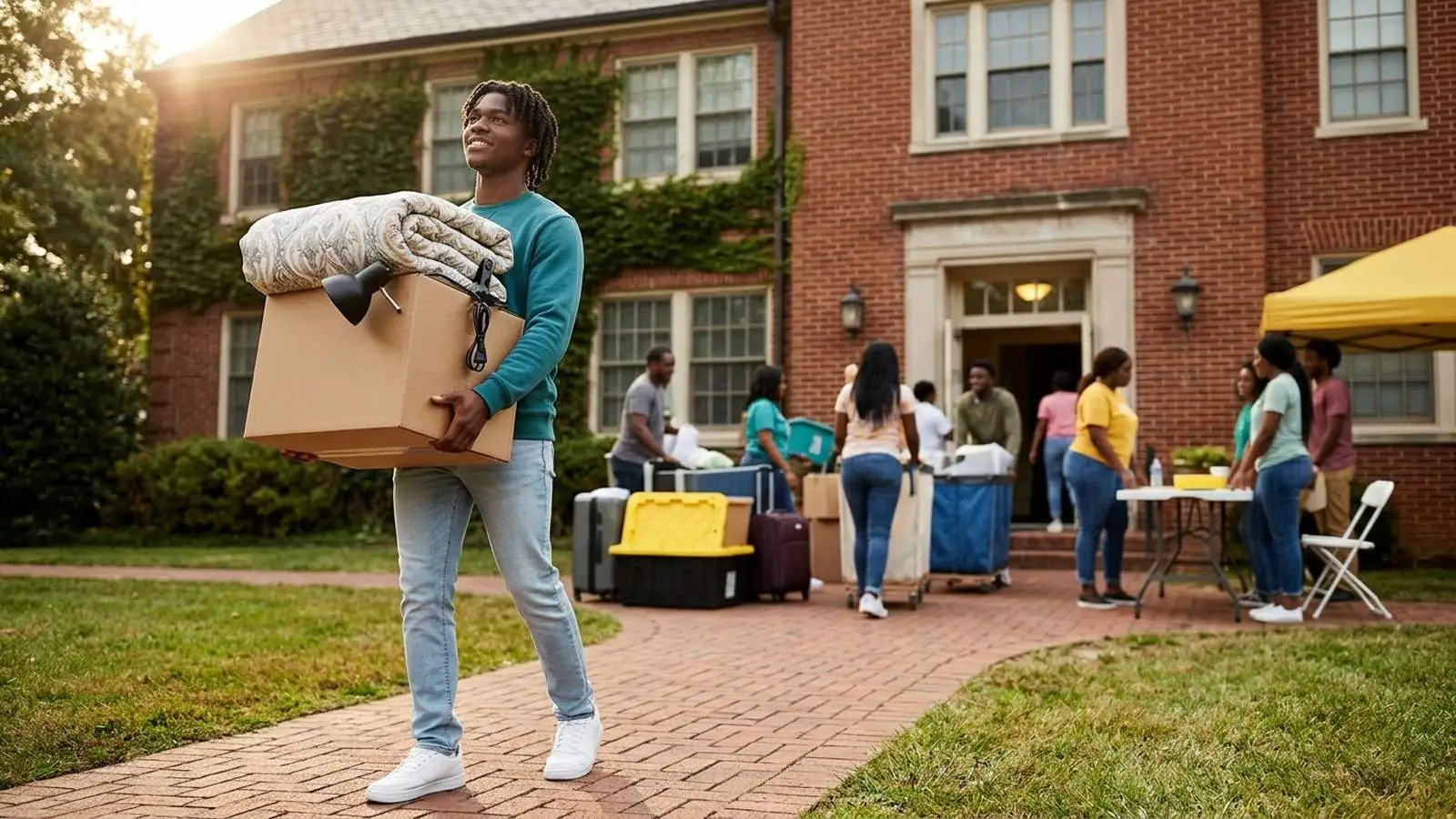
Record admissions at historically Black colleges and universities have created a secondary crisis across the country: a severe shortage of on-campus residence hall space. According to reporting compiled by HBCU Lifestyle, incoming classes and returning student populations are outpacing campus bed capacity, forcing schools to deploy waitlists, enforce strict live-on mandates, and secure overflow accommodations in nearby hotels.
The strain has already disrupted several campuses during recent academic terms. According to HBCU Lifestyle, Hampton University temporarily placed roughly 34 returning students in an area hotel to start the 2026-2027 academic year due to unprecedented housing demand. Southern University closed housing applications entirely after its roughly 2,100 available spots filled up for Fall 2026. At Morgan State University, renovation delays at Harper-Tubman hall pushed completion to mid-November, prompting the school to lodge students in a downtown hotel with shuttle services, dining dollars, and housing credits. Similarly, North Carolina A&T State University housed approximately 200 students in hotel rooms while waiting for new residence halls to open.
The housing squeeze is intensified by the fact that many HBCUs maintain higher on-campus residency rates than national benchmarks. HBCU Lifestyle reported that North Carolina Central University houses 43.4 percent of its undergraduate population on campus, compared to a national average of 24.5 percent at public four-year institutions. Concurrently, several prominent institutions require freshmen to live on campus, including Howard University, Spelman College, Clark Atlanta University, Morgan State University, Florida A&M University, and Virginia State University. These mandates frequently squeeze upperclassmen out of dorm spaces and into competitive local rental markets.
Despite mandatory on-campus rules, institutional housing guarantees are exceptionally rare. A review of policies across 15 HBCUs published by HBCU Lifestyle identified only three schools with explicit freshman housing guarantees: Howard University, Spelman College, and Tuskegee University. Even those commitments require strict adherence to priority filing dates and payment windows. At most other campuses, including Clark Atlanta, North Carolina A&T, Alabama A&M, and Alabama State, room assignments are managed entirely on a first-come, first-served basis.
Securing a spot requires families to navigate non-refundable deposits that range between $150 and $600. Howard requires a $300 enrollment fee, followed by a $50 application fee and a $500 housing deposit once assigned. Institutions such as Virginia State and North Carolina A&T set priority deadlines as early as February and May, with housing queues determined strictly by completion date. Off-campus alternatives also present financial hurdles, with median rents for one-bedroom apartments in November 2026 reaching $2,144 in Washington, D.C. and $1,539 in Atlanta, according to Apartment List data cited by HBCU Lifestyle.
Several institutions have launched capital improvements to address long-term deficits. Morehouse College and Spelman College broke ground in October 2026 on a 793-bed student complex scheduled to open in 2028, while Alabama State University is constructing two buildings to house more than 550 students by spring 2027. North Carolina Central University and Southern University have also secured funding for major residential renovations and new construction. Until these facilities open, prospective students face an environment where early application and prompt deposit payments remain vital.