
France Gripped by Severe Unrest and Mass Arrests as Citizens Resist Government Spending Reductions
France witnessed its most severe civil unrest in years this weekend, with almost 2,400 arrests and nearly 1,000 security officers injured amid widespread protests against public spending reductions and deteriorating services. President Emmanuel Macron promised a strict response while calling for urgent multi-sector discussions ahead of a key budget vote.
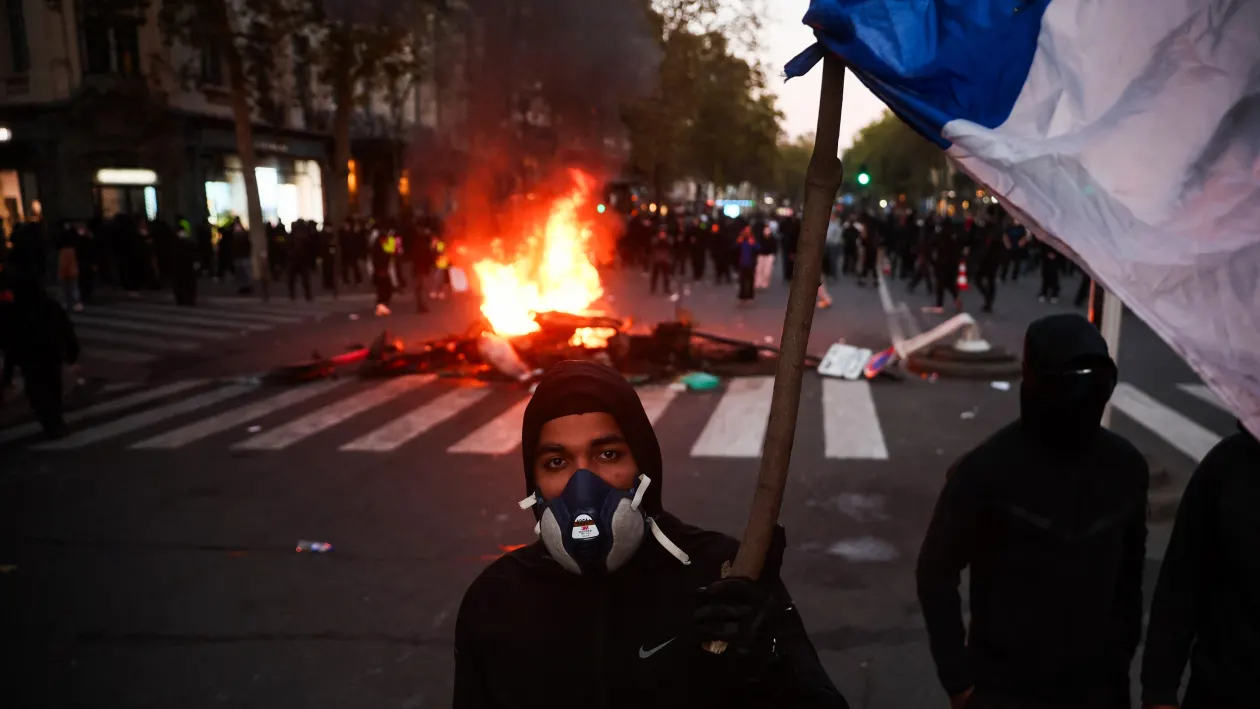
France experienced severe nationwide turmoil over the weekend, resulting in thousands of detentions and widespread structural damage as public frustration over escalating living expenses and diminished public services clashed with government fiscal plans, according to reporting by CNBC.
The unrest erupted into extensive confrontations on Saturday, with authorities arresting nearly 2,400 people across the nation, CNBC reported, citing statistics from the French interior ministry. The ministry additionally stated that nearly 1,000 police officers and gendarmes sustained injuries during clashes that left commercial storefronts looted, walls marked with graffiti, and administrative buildings heavily damaged.
According to official attendance estimates cited by CNBC, roughly 550,000 demonstrators took to the streets across dozens of cities on Saturday, with an estimated 110,000 marching in Paris. The demonstrations followed a month-long student movement addressing teacher shortages and public school facilities, which subsequently merged with broader organized labor dissatisfaction. While hundreds of thousands marched peacefully, radical factions engaged security forces and attacked municipal infrastructure.
In a televised address delivered Sunday evening, French President Emmanuel Macron condemned the destruction, promising what he described as an uncompromising enforcement approach while stopping short of declaring a state of emergency or imposing curfews, according to CNBC. Macron authorized regional prefects and municipal executives to prohibit gatherings where deemed necessary to protect retail centers and public buildings. He also initiated a review into intelligence and police readiness while directing government officials to convene students, teachers, labor unions, lawmakers, and business leaders to craft formal solutions.
The protests unfold as Prime Minister Sébastien Lecornu's minority government attempts to secure €54 billion ($61 billion) in expenditure cuts within its 2027 budget proposal to counter an expanding deficit, CNBC reported. National debt climbed to a record €3.6 trillion in the second quarter, representing 119 percent of the nation's gross domestic product, while global interest rate shifts have made servicing that debt substantially more expensive. The National Assembly is scheduled to hold a formal vote on the first section of the budget measure on Tuesday.
Significant damage occurred across regional urban centers. In Limoges, a 143-year-old municipal hall was set ablaze and largely destroyed, with Mayor Guillaume Guérin telling Reuters that individuals deliberately targeted the structure. Public halls in Marseille were entered, and a tourist facility in Lyon was set on fire, CNBC reported. Interior Minister Laurent Nuñez confirmed that several hundred businesses experienced serious material losses, while Bordeaux Mayor Thomas Cazenave reported up to 100 stores were looted.
Paris law enforcement stated that one protester died of cardiac arrest during the capital's gatherings, though additional details were not disclosed. Police used tear gas and stun devices on Sunday afternoon to break up crowds gathered at Place de la République. Economy Minister Roland Lescure promised financial assistance for affected merchants and stated that those who caused damage would be held financially accountable, while political opposition figures across the ideological spectrum publicly criticized the administration's handling of the crisis.