
Historic Endurance: Ten Columbus Commercial Institutions That Have Outlasted 75 Years
Columbus, Georgia, built its early trade along the Chattahoochee River and textile manufacturing before evolving into a regional hub for commerce and finance. Historical reporting highlights ten long-standing enterprises established prior to 1951 that remain active through adaptation, family stewardship, and corporate reinvention.
Columbus, Georgia, established its commercial foothold in the early nineteenth century as riverfront trade along the Chattahoochee River and emerging cotton mills formed the foundation of the regional economy. According to reporting by the Columbus Times, while hundreds of enterprises opened and disappeared as the city transitioned into a modern manufacturing and financial center, at least ten commercial establishments and surviving successor entities have maintained operations for more than 75 years.
The oldest enterprise on the register is the Columbus Ledger-Enquirer, whose foundational publication, the Columbus Enquirer, debuted in 1828 alongside the incorporation of the city itself. The Columbus Ledger was later founded in 1886, leading to a unified daily publication in 1988. As reported by the Columbus Times, the newspaper documented nearly two centuries of regional developments before ownership shifted in July 2026, when the Georgia Trust for Local News acquired the outlet from McClatchy.
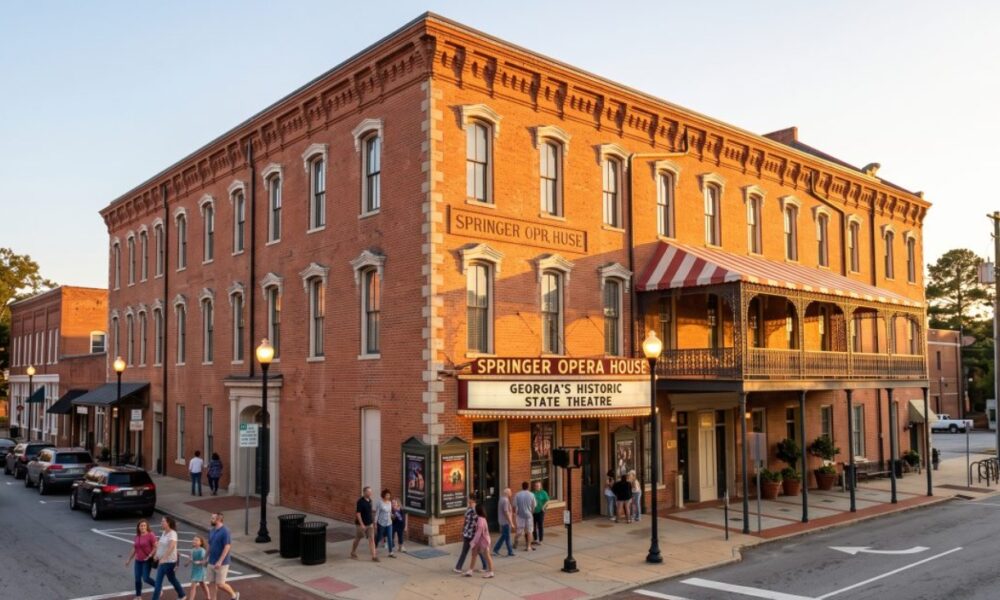
Commercial insurance agency Willcox-Lumpkin Co. traces its documented origins to 1848, protecting personal and corporate property long before modern transit arrived in the region. The firm remained connected to generations of the Willcox and Lumpkin families throughout its long tenure. In the arts, the Springer Opera House opened in 1871 under the direction of businessman Francis Joseph Springer. Although declining patronage almost forced its demolition in the 1960s, local preservation efforts revitalized the Victorian landmark, returning live theater to its stage in 1965.
Family retail craftsmanship is exemplified by Schomburg’s Jewelers, founded in 1872 by clockmaker Carl Frederick Schomburg. The enterprise now operates on Rollins Way as Georgia's oldest fifth-generation jeweler, preserving a boutique service model while adapting to luxury retail shifts. In industrial manufacturing, Theodore and J. Poitevent Golden launched Goldens’ Foundry & Machine Co. in 1882 to supply equipment to burgeoning area operations. The company continues to produce industrial castings and retail cookware under descendants of its founding family, outliving the regional textile mills that originally sustained its market.
Corporate influence expanded significantly with the W.C. Bradley Co., founded in 1885 by William Clark Bradley as a cotton venture. Bradley's enterprise steadily expanded into groceries, fertilizer, manufacturing, and financial services, eventually giving rise to the outdoor cooking brand Char-Broil and establishing its modern riverfront headquarters. Similarly, the regional banking presence that became Synovus emerged in 1888 from two small banks organized to secure earnings for local textile workers. The entity evolved into Columbus Bank and Trust and later Synovus Financial Corporation before completing a merger with Pinnacle Financial Partners in January 2026, with Pinnacle branding scheduled to take effect in 2027 alongside planned downtown office expansions.
Neighborhood staples also anchored daily community life across the twentieth century. Dinglewood Pharmacy opened its doors on November 13, 1918, maintaining standard medicinal offerings while gaining wider fame for its lunch counter scrambled dog dish. David Abraham Striffler established Striffler-Hamby Mortuary in 1923, constructing a dedicated funeral facility in 1930 that now operates under the Dignity Memorial network. Rounding out the historical lineup, commercial radio station WRBL began broadcasting on May 10, 1928, after pioneer Bill Lewis brought programming to the area. Confirmed through research by Columbus State University and Historic Columbus, the station later transitioned into WRCG in 1977, keeping its airwaves active across nearly a century of communication history.